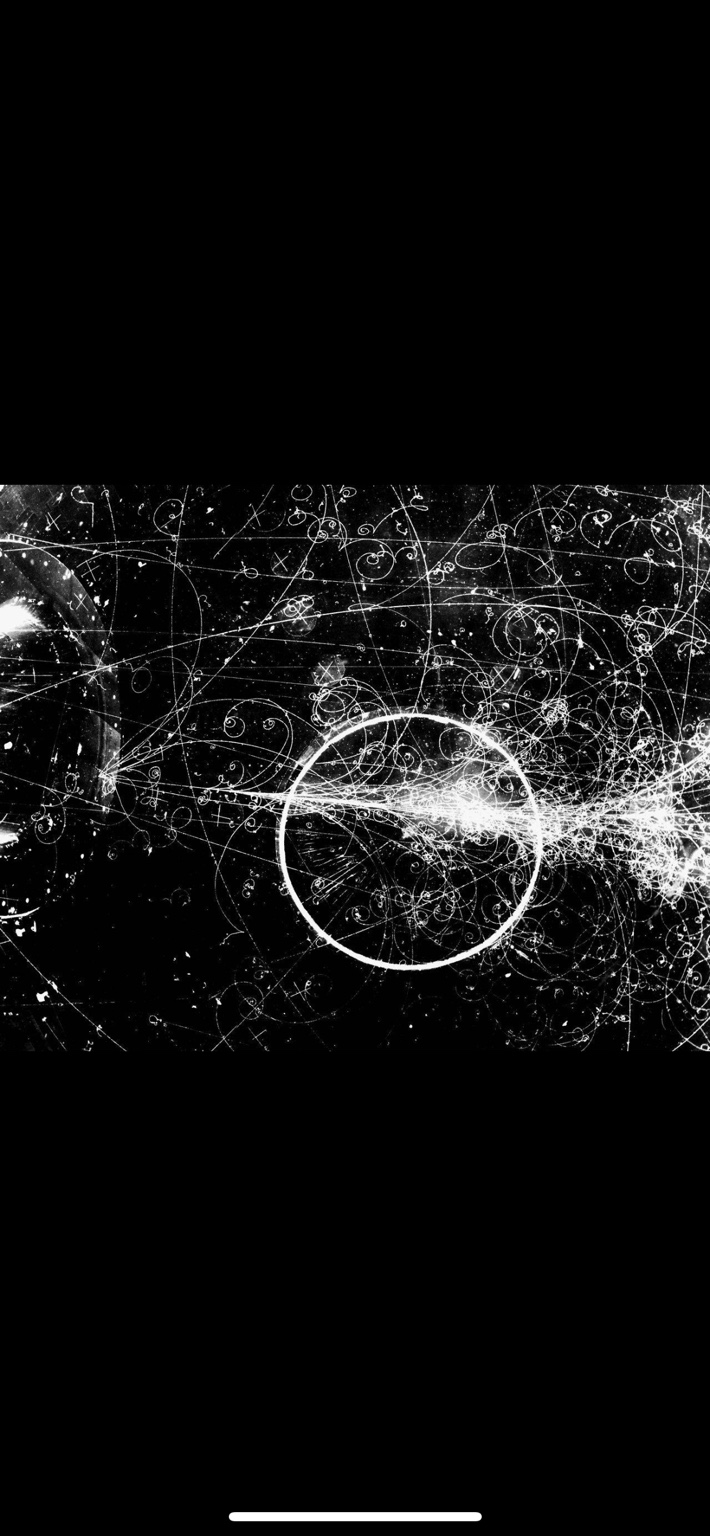
Scientific reference
Particle tracks
Curved paths, spirals, and crossings offer a starting point: a visible record that asks us to imagine the event behind it.
Concepts, references, and evolving forms. Each begins with a reality worth encountering more closely.
Installation images show concepts in development. Scientific reference images are labeled separately.
An event beyond our senses can leave a visible trace. These references and studies ask how that trace might become a physical encounter.
Curved paths, spirals, and crossings offer a starting point: a visible record that asks us to imagine the event behind it.
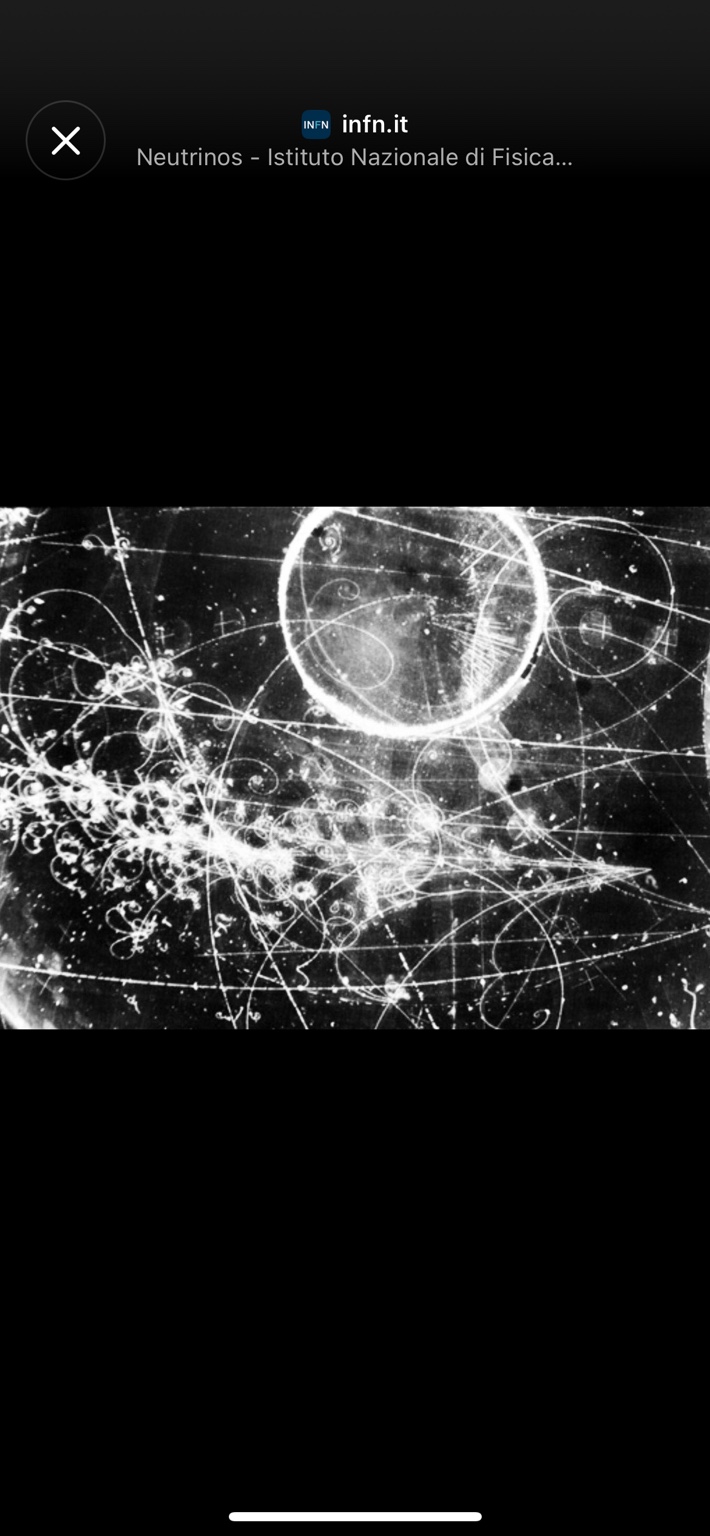
A second view of particle tracks. In a bubble chamber, charged particles leave trails of bubbles that can be photographed. Reference screenshot via INFN.
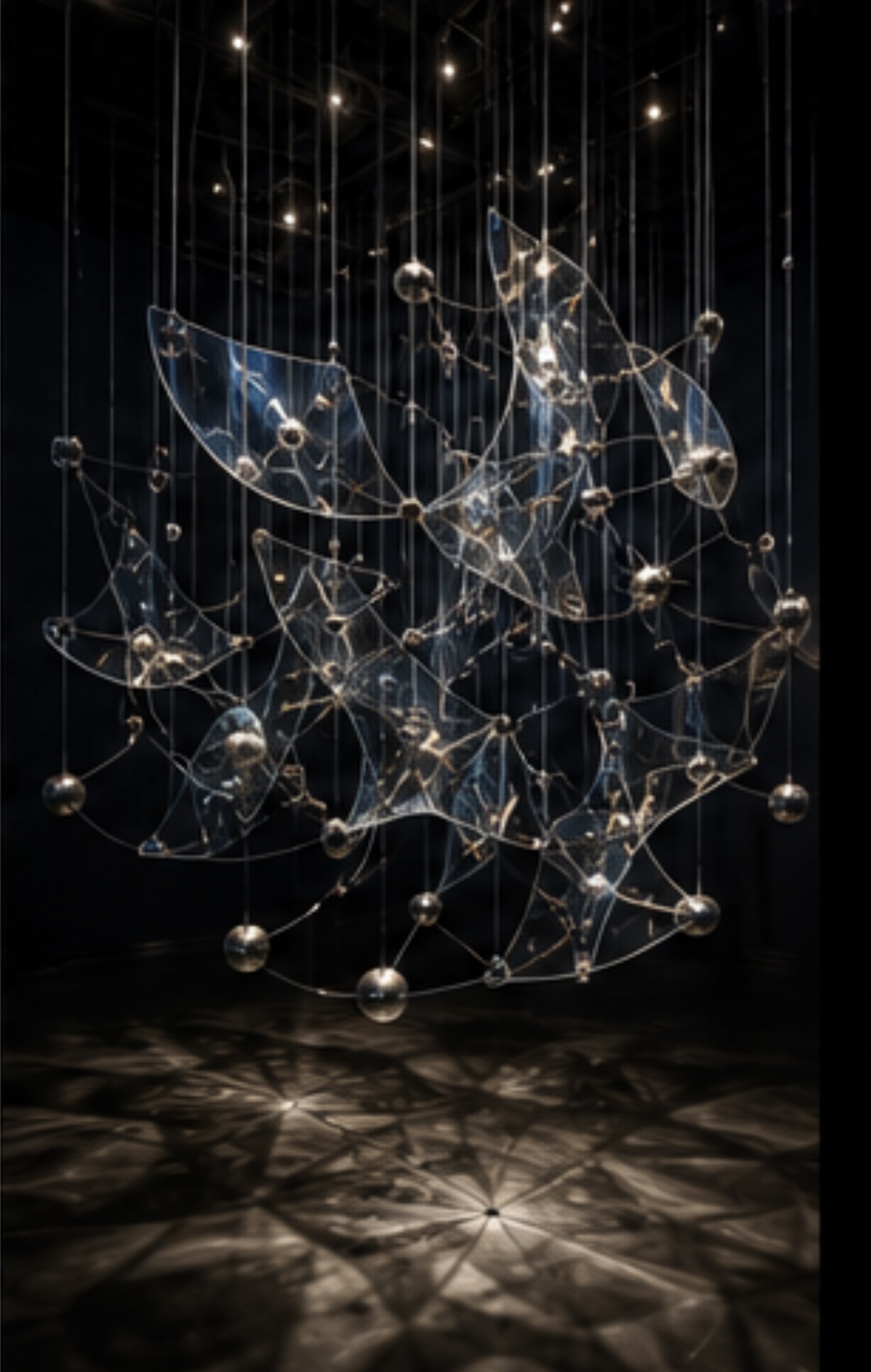
Glass arcs, suspended spheres, and the shadows between them give relationships a physical presence. Moving around the work changes what connects and what comes into view.
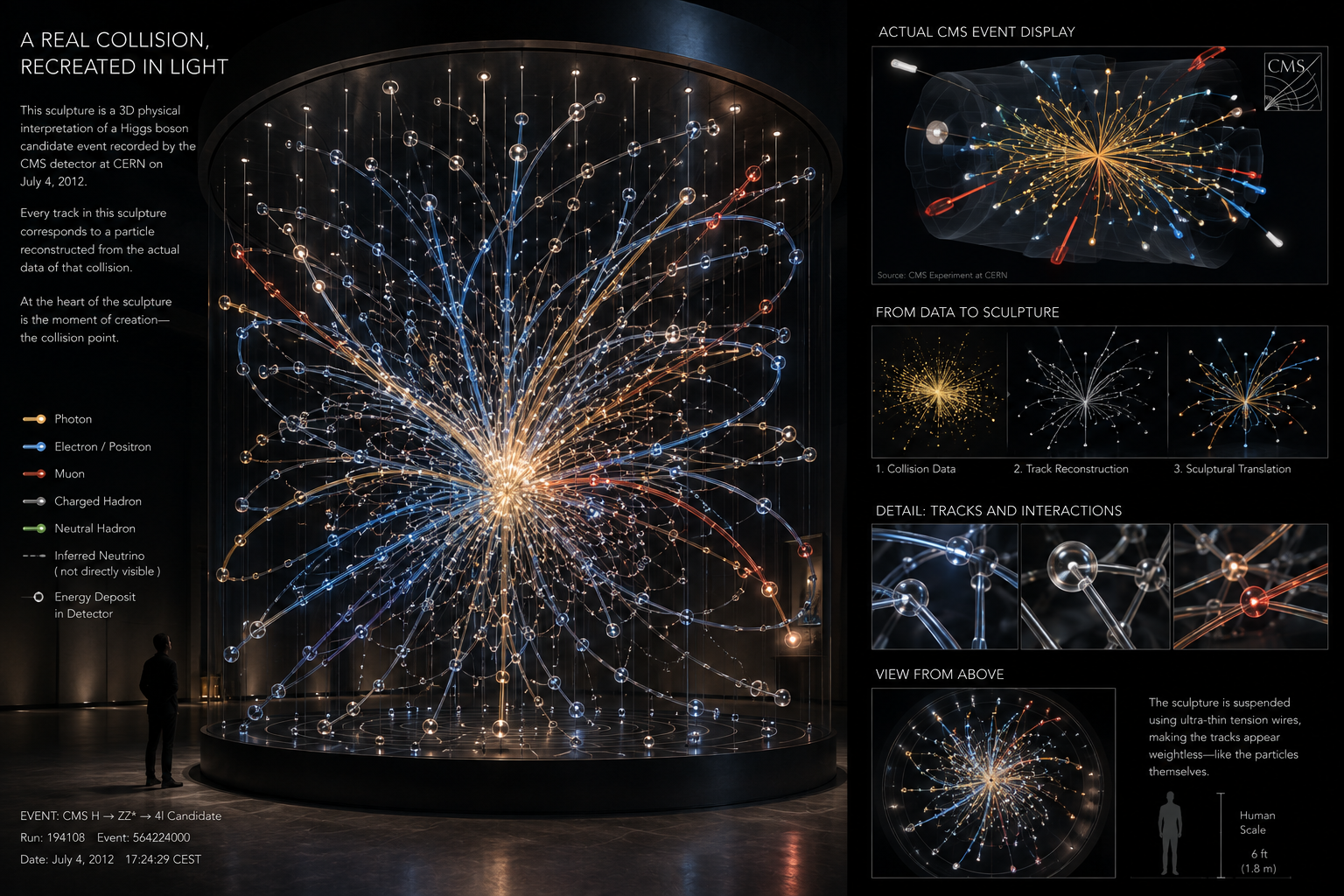
A study for translating particle-event geometry into suspended trajectories. A moment too brief to witness becomes a structure to explore.
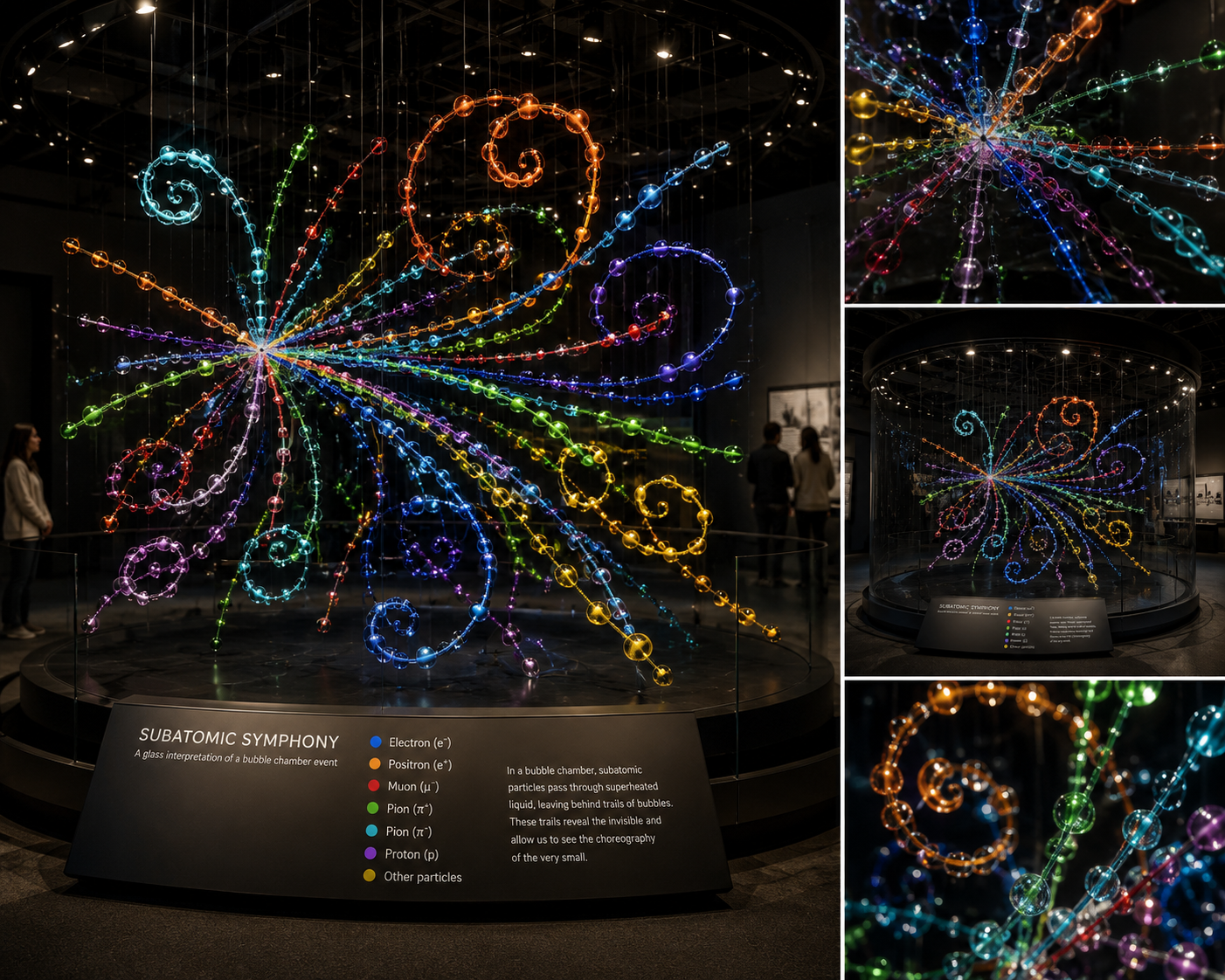
Light and darkness give a particle-inspired field a room of its own. The visitor moves through the relationships, finding new alignments with each step.
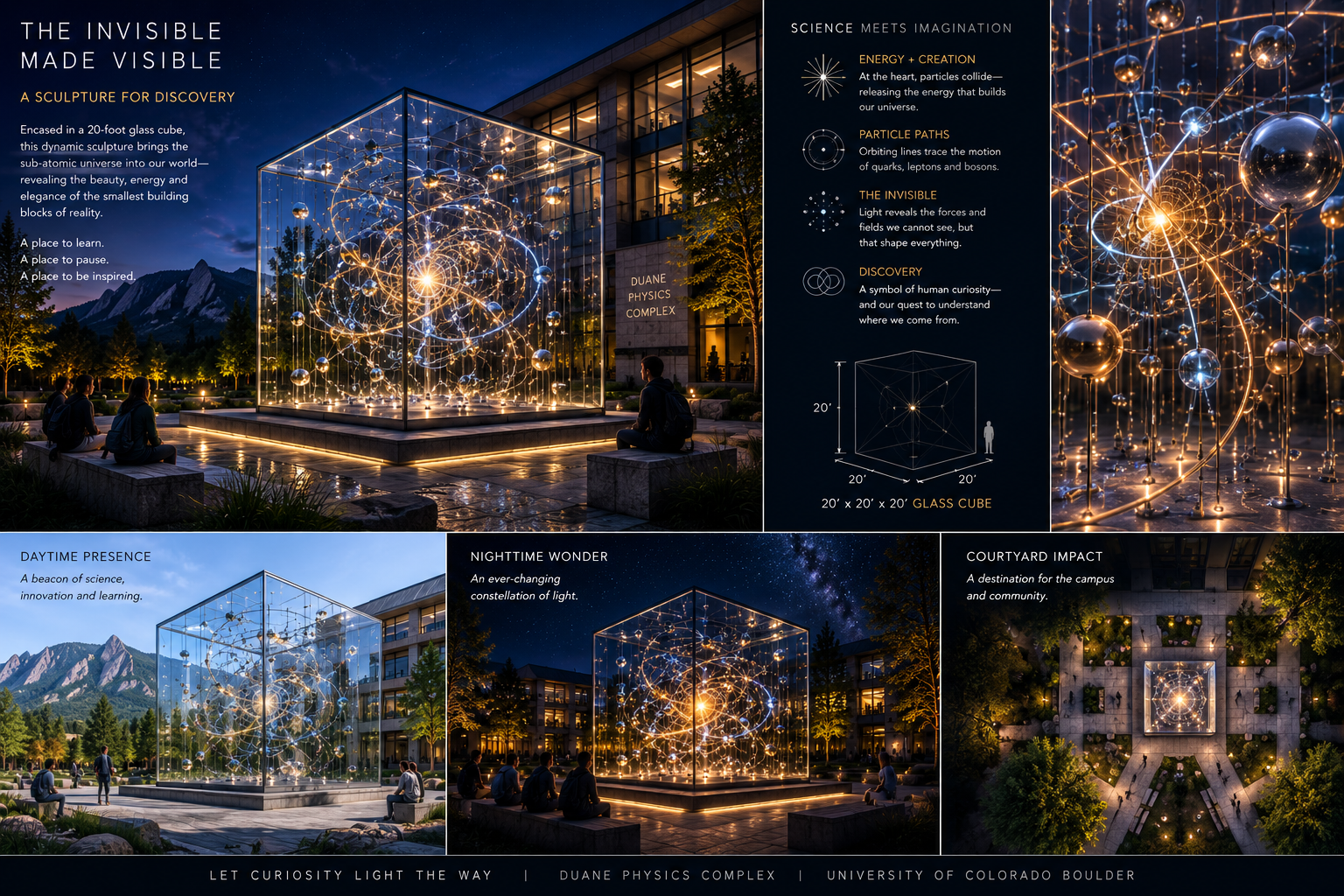
A transparent pavilion holds a field of trajectories in public view. A scientific idea becomes a reason to pause, enter, and look again.
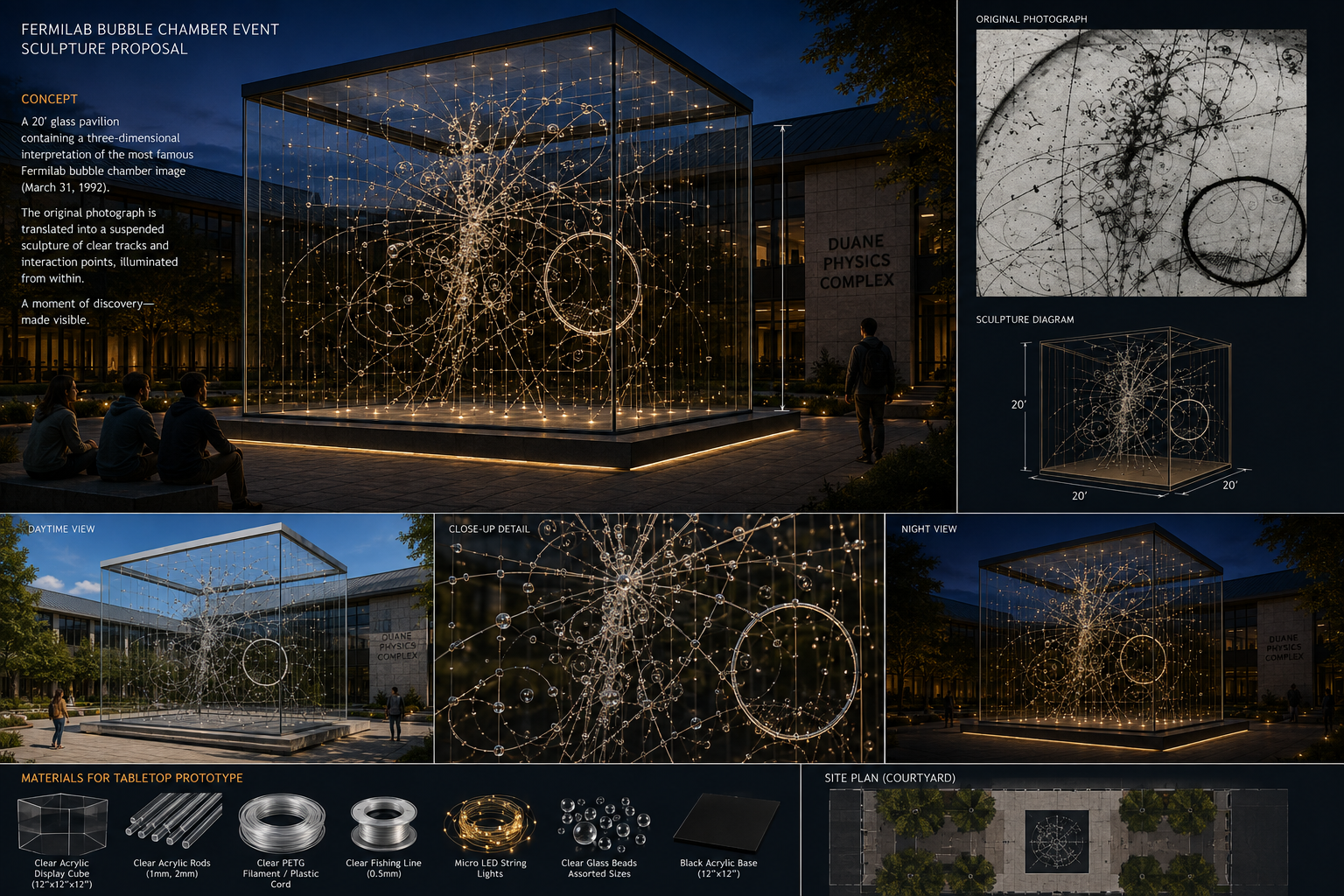
A study in how an installation can belong to its setting. Light, proportion, and open space invite a closer look from the paths people already use.
Sound unfolds in time. A recording holds relationships that can also be explored through shape, distance, rhythm, and movement.
A microscopic record groove becomes an inhabitable canyon. The visitor follows an enlarged version of the terrain a stylus reads: a performance encountered as landscape.
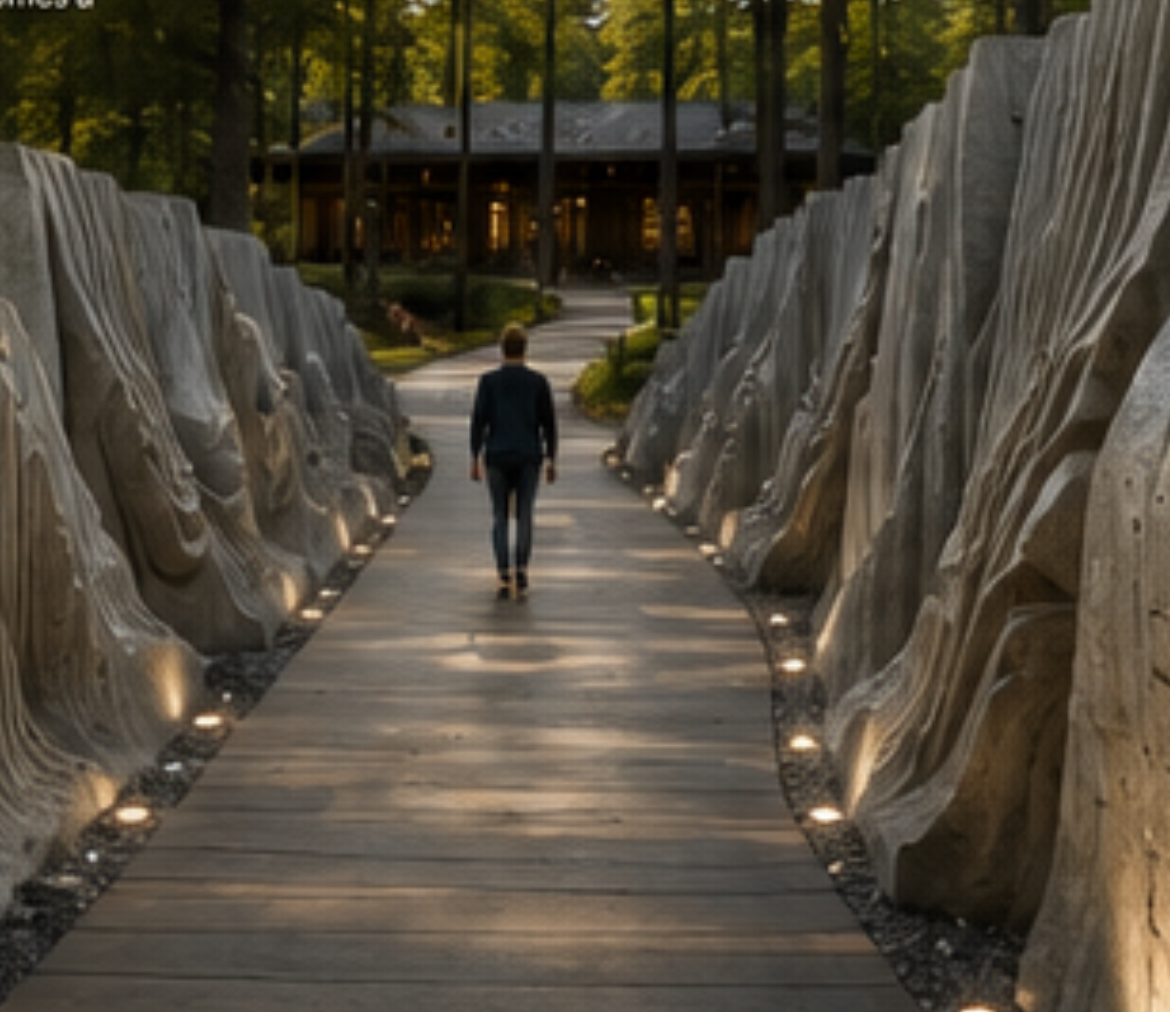
The same idea opens to trees, daylight, and a familiar destination. Walking between the walls becomes a quiet way to consider the physical shape of recorded sound.
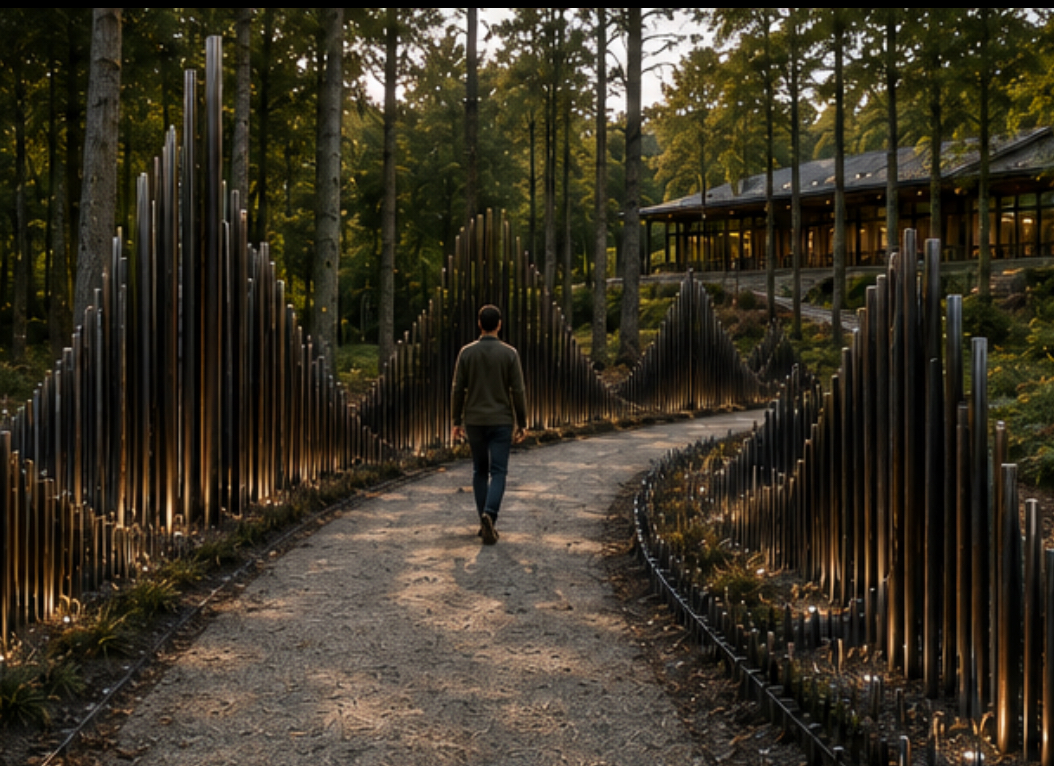
Rising forms, repeated intervals, and open spaces suggest phrases, rhythm, and rests. A musical structure becomes a route experienced at the pace of a walk.
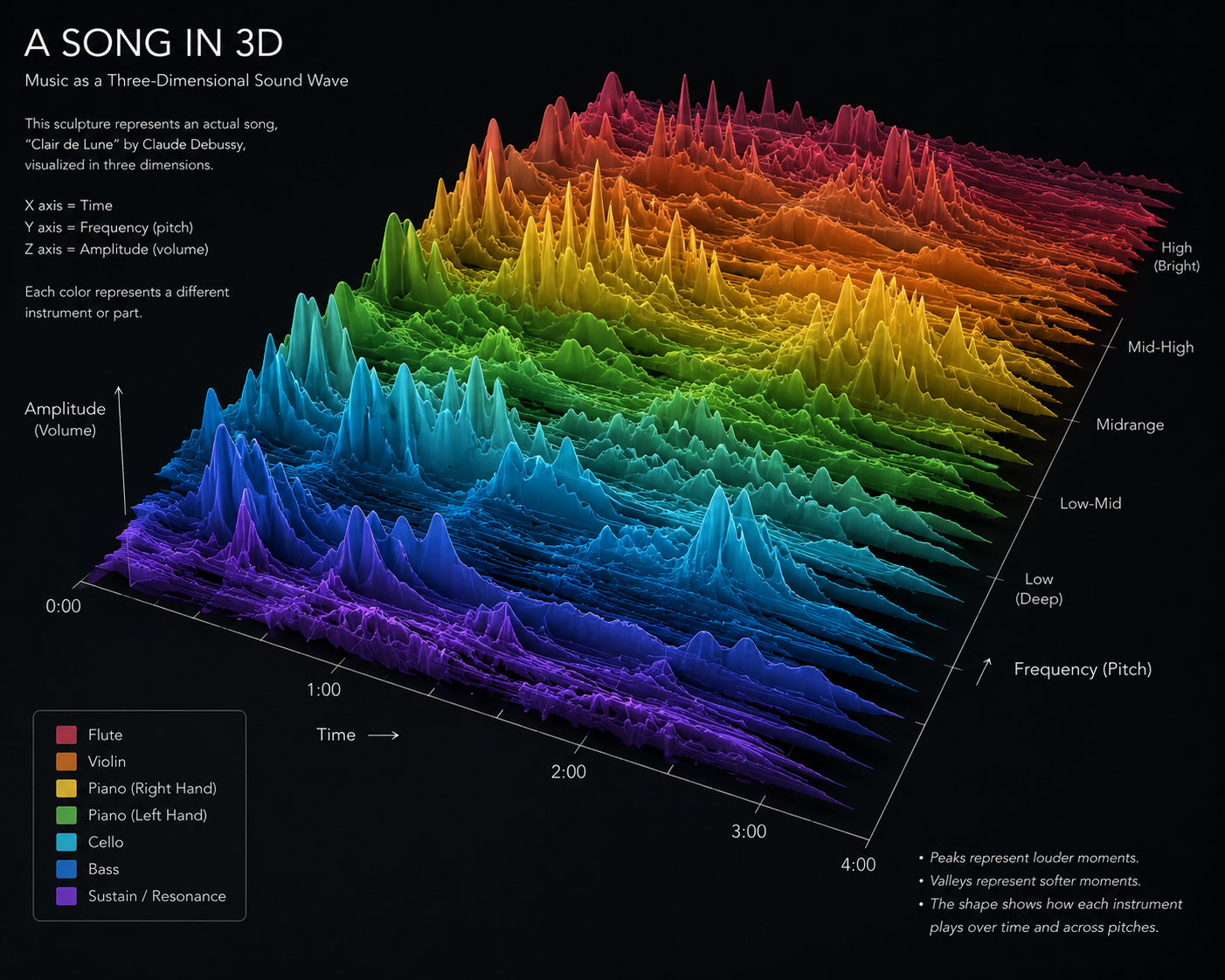
A recording offers a set of relationships: time, pitch, energy, and change. This study explores how a performance could take shape as a physical object.
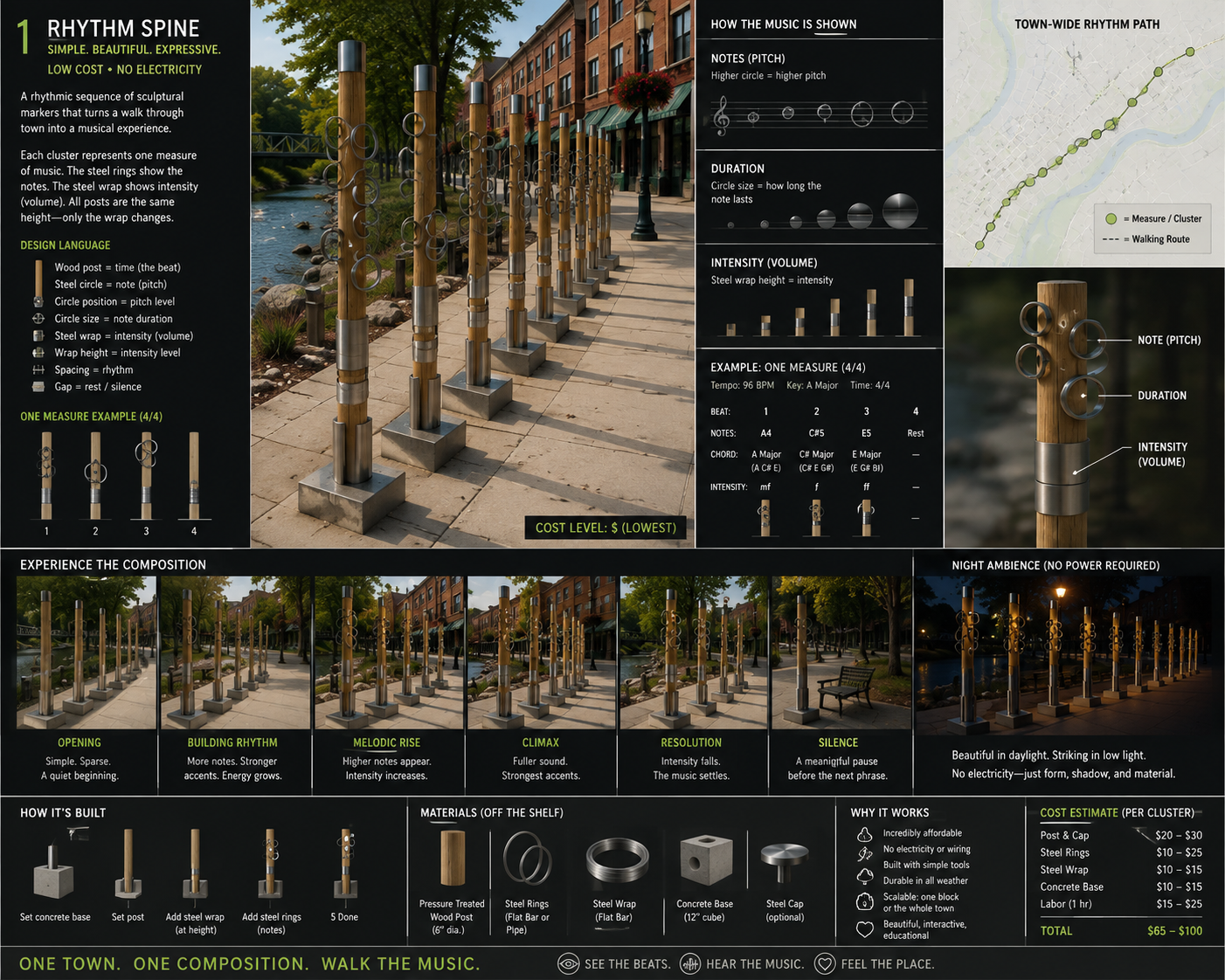
A composition can be suggested through simple materials and spacing. Repetition establishes a rhythm; an opening gives a pause somewhere to happen.
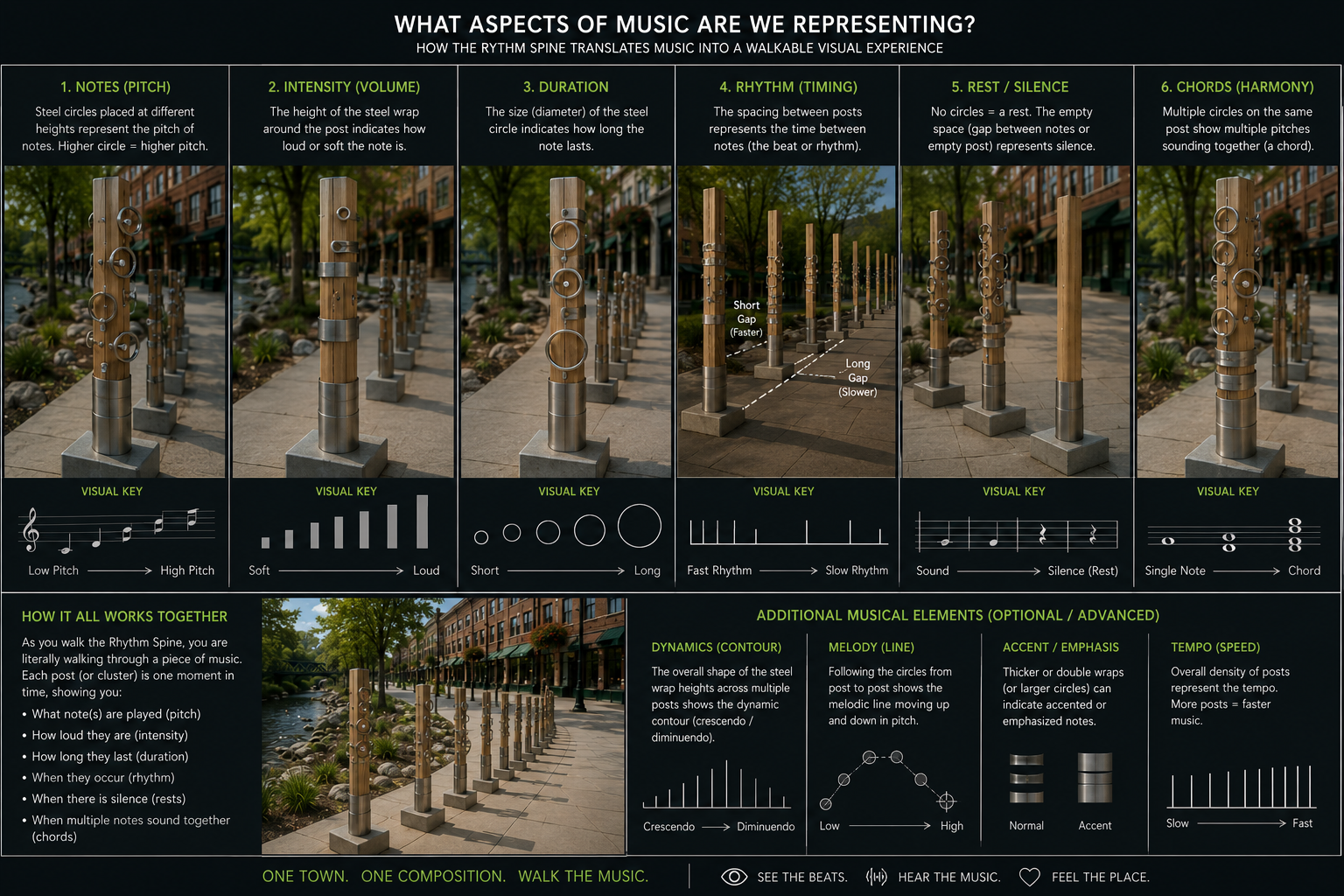
Pitch, duration, intensity, and silence each offer a different design question. The aim is a consistent physical language through which a composition can be discovered.
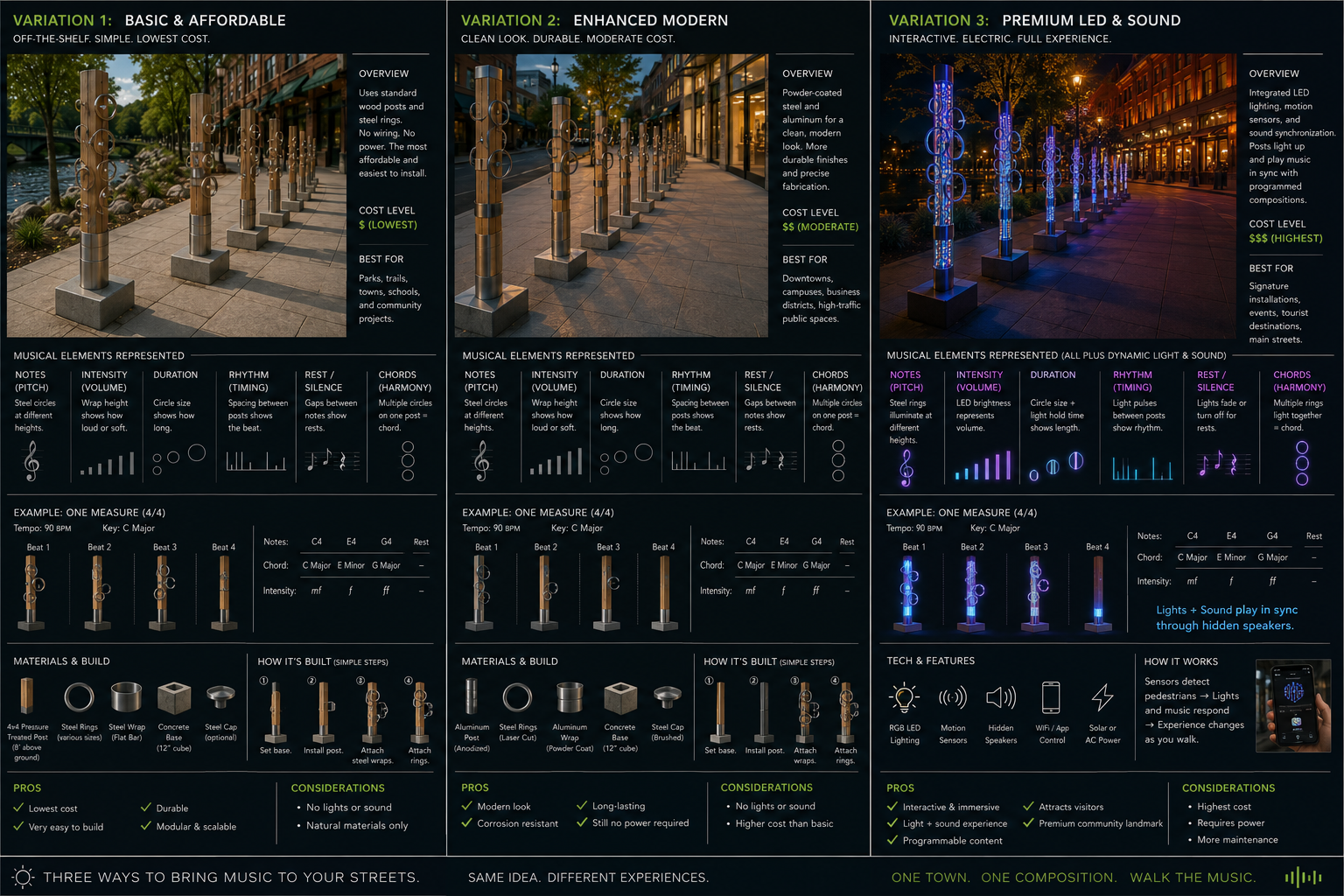
A simple intervention can grow into a larger experience of light and sound. At every scale, the musical relationships remain the starting point.
One Sun and One Atom give unfamiliar proportions a familiar ground. Explore the models, change the scale, and notice what happens to distance.
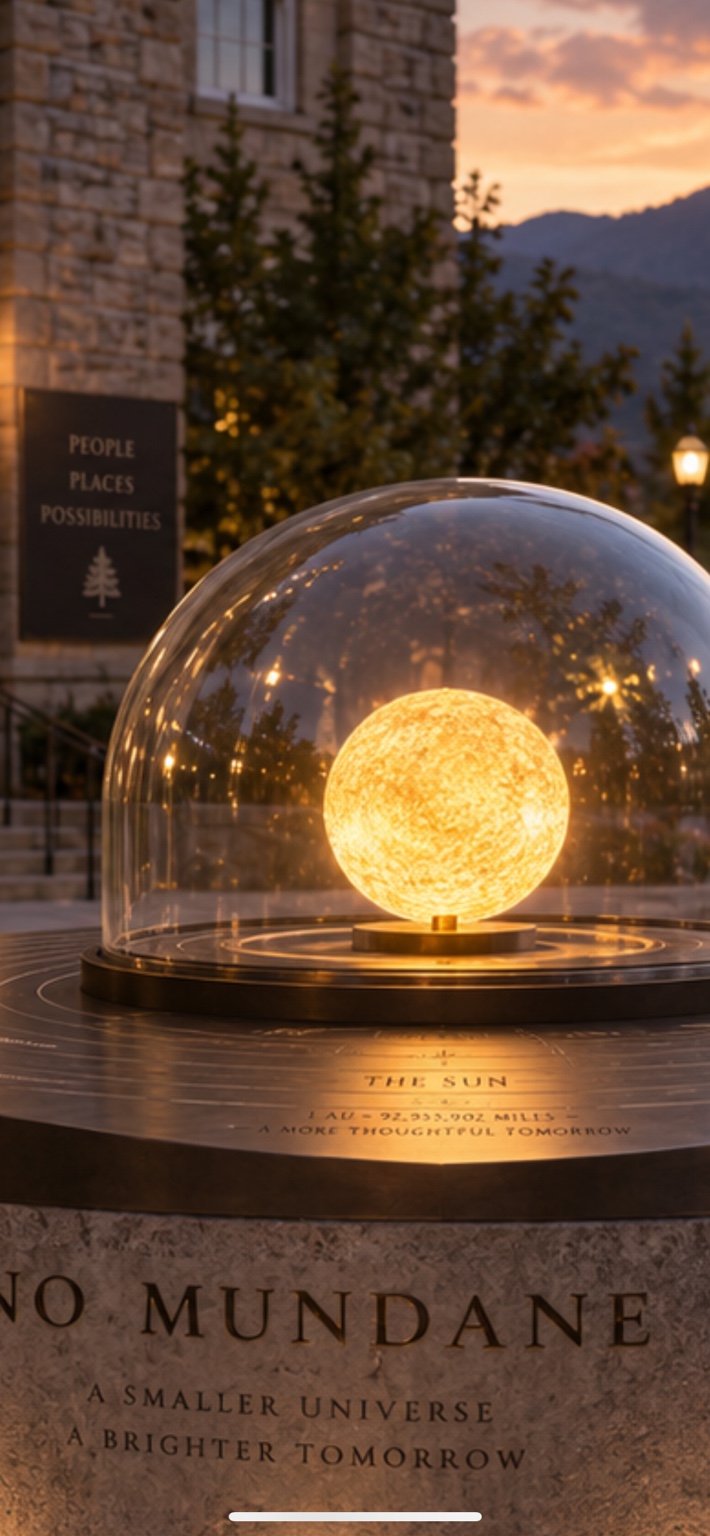
A small glowing Sun becomes the beginning of a much larger encounter. The space between the planets gives the surrounding streets a new meaning. Explore the interactive model →
Enlarge a hydrogen nucleus and explore its characteristic atomic scale across a landscape. A qualitative probability cloud offers a glimpse of a different kind of vastness. Explore the interactive model →
A way to explore the relationships inside a complex system through light, layers, and movement.
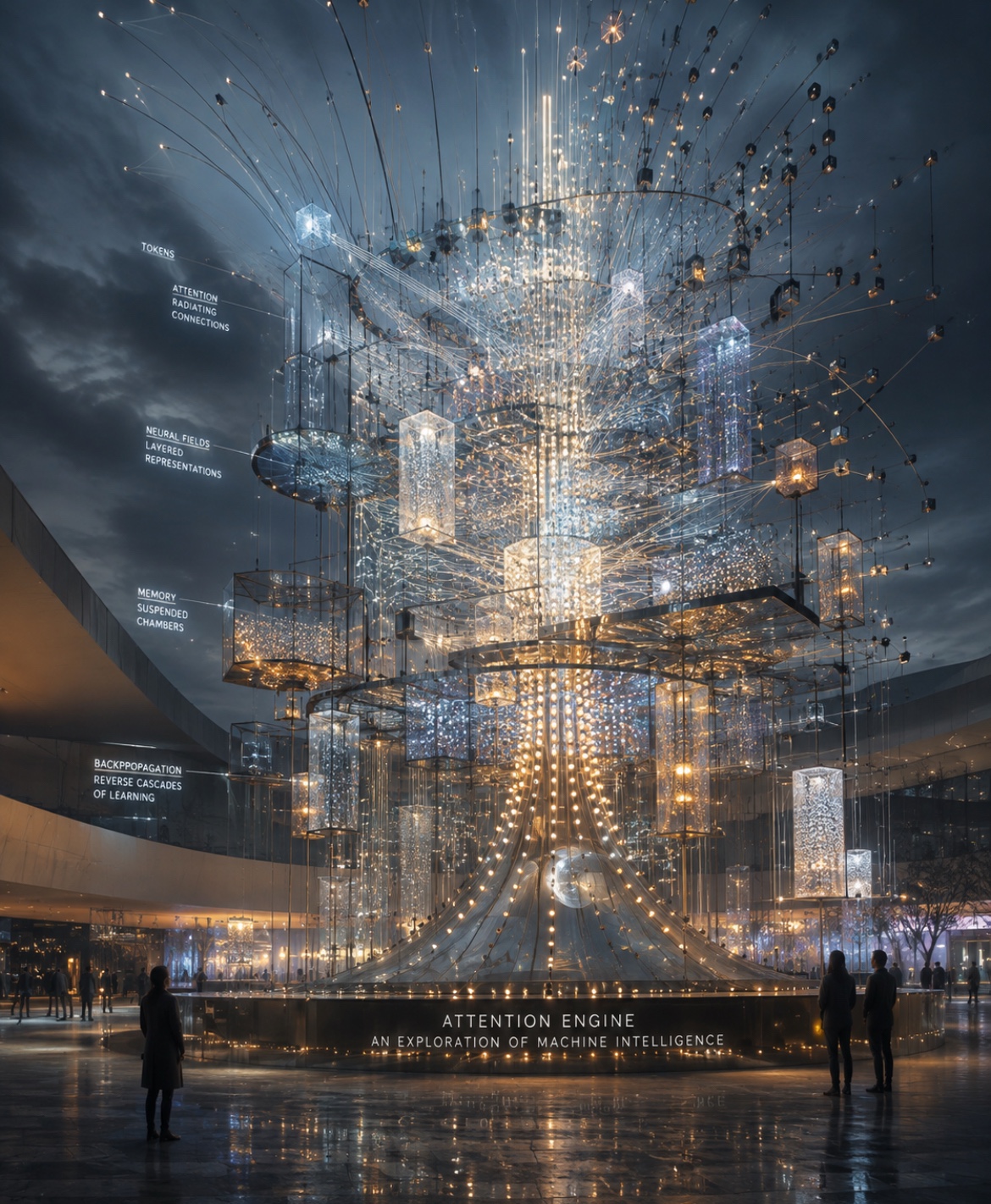
Suspended chambers and branching paths imagine machine intelligence as an environment. Traveling light could reveal how signals are selected and combined. This is an artistic model of attention and learning.
Orbit, interval, trace, and open space form an evolving visual language for No Mundane.
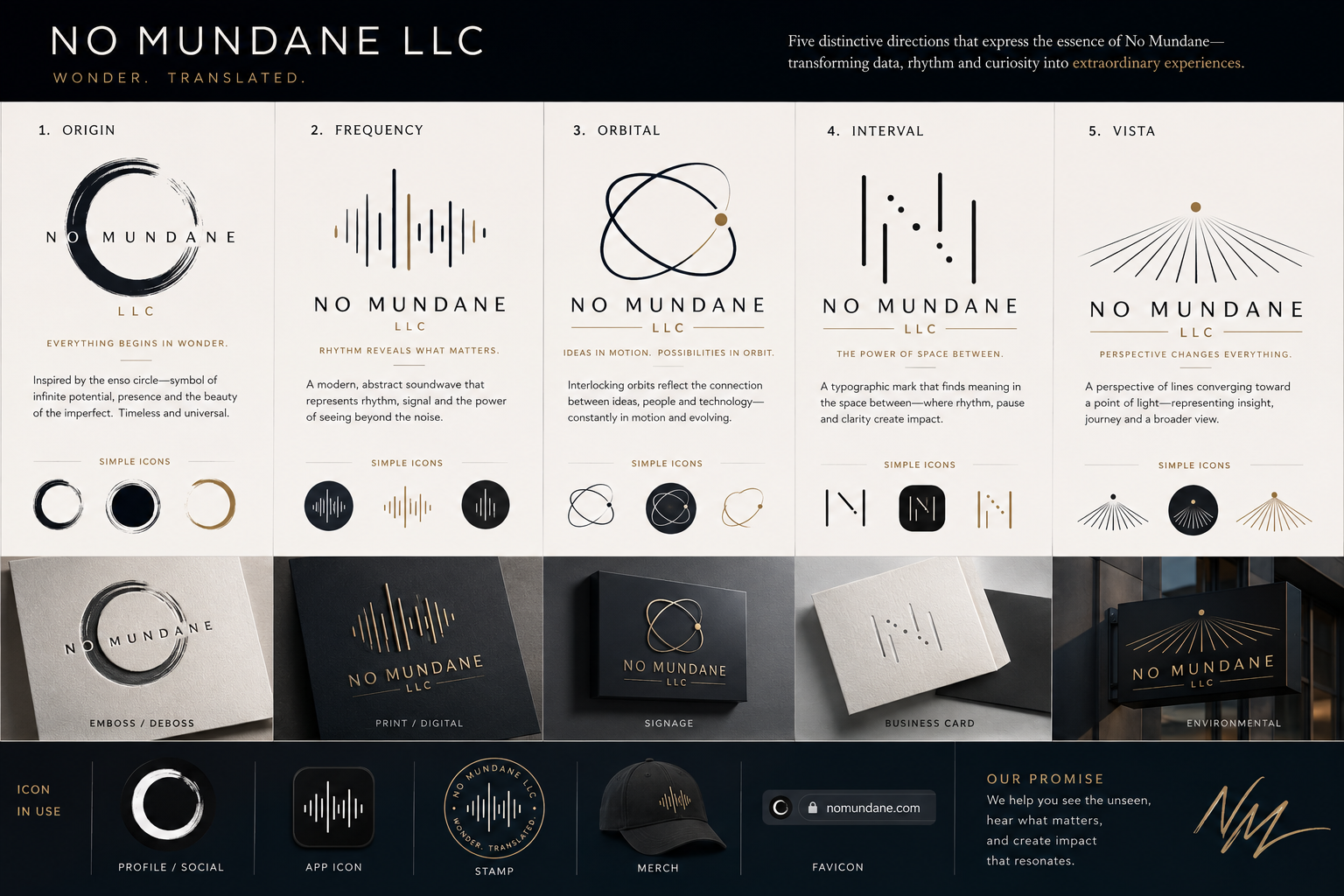
A visual vocabulary drawn from the work itself: paths that connect, spaces that separate, and patterns that invite another look.
A mark that holds several possible readings: a signal, an orbit, a score. Its openness leaves room for the next question.